Side Hustle With No Creative Talent? Here's Why That Doesn't Matter
Quick Answer
Question: Can you build a profitable side hustle if you don't have creative talent?
Answer: Absolutely. Most successful side businesses aren't built on creativity at all. They're built on problem-solving, organization, communication, and operational thinking, and those are skills that corporate professionals already have in abundance. The biggest advantage isn't artistic ability. It's knowing how to execute consistently within limited time.
---
Wondering what this looks like for your situation? Ask AriaStar. Tell her your work, your hours, and what you're weighing, and she'll help you think through your next step. Free, no sign-up, no card.The Situation You're In
You've been thinking about starting something on the side for months, maybe longer. But every time you look at what's working for other people, it's all content creation, graphic design, handmade products, photography, or some other skill that requires an eye you just don't have. So you close the browser tab and go back to your spreadsheets.
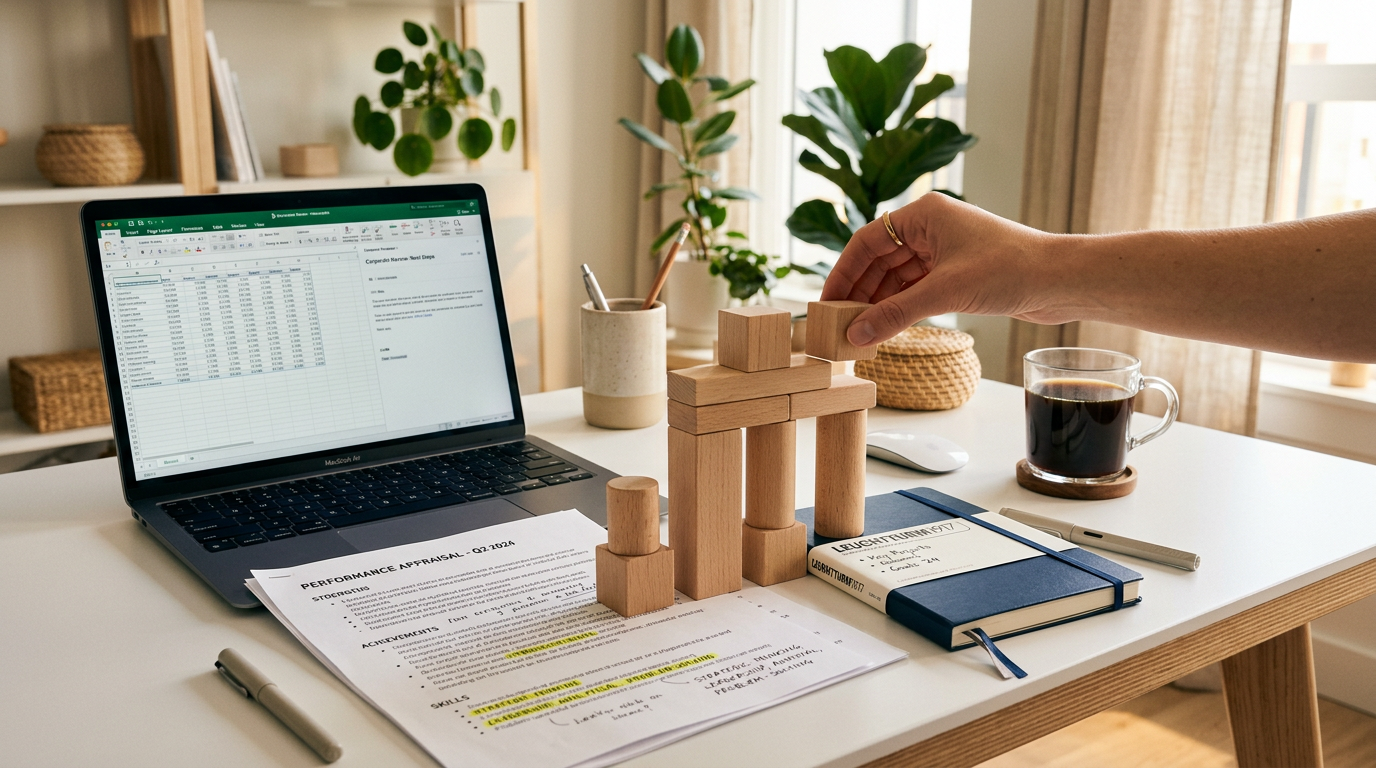
I want you to do something right now. Pull up your LinkedIn profile or your last performance review. Look at the skills listed there. Project management. Client communication. Process improvement. Data analysis. Budget oversight. Those aren't just job duties. Those are the raw materials for a business. The fact that you don't see them that way yet is exactly the problem we're going to fix.
You're not alone in this, and there are proven approaches that work.
---
Why This Happens
Social media has created a deeply skewed picture of what entrepreneurship looks like. The algorithm rewards visual content, so the side hustles that get the most attention are the ones that photograph well: candle-making, digital art, Etsy shops full of hand-lettered prints. When that's all you see, it's easy to conclude that starting a business requires some kind of artistic gift you weren't born with.
Something else is going on beneath the surface, though. When you tell yourself "I'm not creative enough," what you're really saying is "I don't have a clear way in." Creativity becomes a convenient label for a deeper uncertainty. You're not sure what you'd even offer, and since you can't picture yourself painting watercolors or designing logos, you assume there's nothing for you. I've seen this pattern hundreds of times with the corporate professionals I work with, and it's almost always a framing problem, not a skills problem.
The most in-demand services in the market right now aren't creative at all. They're operational. Businesses need people who can organize their back end, manage their projects, write clear proposals, analyze their numbers, and keep things running. These are boring-sounding skills that companies will pay real money for. And if you've spent years in a corporate environment, you've been training for this without realizing it.
---
What Actually Works
1. Audit what people already ask you for help with.
This is the fastest path to a viable business idea. Think about the last few times a coworker, friend, or family member asked for your help with something work-related. Maybe you're the person everyone comes to when they can't figure out a spreadsheet. Or maybe you're the one who always gets pulled into meetings because you can explain complicated things clearly. Those repeated requests are market signals. They tell you where your skills are already valued, even if nobody's paying you for them yet.
2. Translate your job title into a service.
In my experience, corporate professionals undervalue their own expertise because it feels ordinary to them. But "ordinary" inside a Fortune 500 company is extraordinary to a small business owner who's drowning in disorganization. If you manage operations, you could offer operations consulting to small businesses. If you handle compliance, there are entire industries of small companies that need help staying compliant but can't afford a full-time hire. The gap between "what I do at work" and "what I could sell" is usually much smaller than people think.
3. Pick a business model that rewards consistency over inspiration.
Some business models require you to constantly come up with new ideas, like content creation, product design, and trend-based e-commerce. Others reward showing up and executing the same process reliably. Consulting, freelance project management, bookkeeping, virtual operations support, course creation based on your expertise... These are all businesses where the value comes from your reliability and competence, not from having a fresh creative vision every week. For someone working 10 strategic hours per week on the side, consistency-based models are far more sustainable.
Low creativity, high potential for 10 hrs/week:
- Consulting (your corporate skill)
- Freelance operations/PM
- Bookkeeping/admin services
- Online course (your expertise, though this requires medium upfront effort)
High creativity, harder in 10 hrs/week:
- Content creation (video, design)
- Handmade products/Etsy
4. Stop comparing your Chapter 1 to someone else's Chapter 10.
The person with 50K followers selling digital art started somewhere too, and their path has nothing to do with yours. I started making jewelry on the side while working at a film studio. It was just something I did on weekends. When I left that job in 2006 to do the jewelry business full time, I thought I had it all figured out. Then 2008 happened, the economy crashed, and suddenly nobody was buying handmade jewelry. I had to pivot fast. I taught myself web design and marketing because I needed to eat, and that pivoted business became something real. Was I the most creative designer in the world? No. But I understood what businesses needed, I could communicate clearly, and I could deliver on time. That was enough to build something sustainable. Your version of "enough" is probably closer than you think.
---
Not sure which of these models fits your actual skills and the hours you've got? Tell AriaStar what you do at work and what people already come to you for, and she'll help you narrow it down to a starting point that makes sense for you. Free, no sign-up, no card.Frequently Asked Questions
What side hustle can I start with no special skills?
You almost certainly have more marketable skills than you realize. Corporate professionals often overlook abilities like project coordination, data organization, process documentation, and client management because those skills feel routine. Any of these can become a freelance service or consulting offer aimed at small businesses that desperately need this kind of support but can't afford to hire full-time.
Do you need to be creative to start a business?
No. While some businesses require artistic or design skills, the majority of profitable side businesses are built on execution, problem-solving, and reliability. The most sustainable side businesses for corporate professionals are ones that use the operational and strategic skills they've already developed, not ones that require them to become someone they're not.
What are the best side hustles for corporate workers?
Consulting in your area of expertise, freelance project management, virtual COO services, bookkeeping, course creation, and business operations support are all strong options. The best fit depends on your specific background and what you enjoy doing. Look for models where your corporate experience is the competitive advantage rather than a creative portfolio.
How do I start a side business if I only have a few hours a week?
Ten focused hours per week is enough to build a real business if you spend that time on the right activities. I help people identify high-impact tasks and build systems that don't require constant attention. The goal is strategic effort, not more hours.
What if I've already failed at a side hustle before?
Past failures don't mean you're the problem. They usually mean the business model wasn't a good fit for your skills, your schedule, or both. If you tried something that required constant creative output and burned out, that's useful data. It tells you to look for something that plays to your strengths instead. Many of the people I work with have one or two false starts behind them, and that experience actually makes them better at choosing the right path the next time.
---
The Bottom Line
The belief that you need creative talent to build a side business is one of the most effective dream-killers out there, because it sounds so reasonable. Of course you need to be creative to start a business, right? But it's just not true. What you need is a skill that solves a problem, a structure that fits your schedule, and the willingness to start before everything feels perfect.
If you've been sitting on the sidelines because you don't see yourself as the "creative entrepreneur" type, I'd encourage you to reframe the question entirely. Don't ask "What can I create?" Ask "What do I already know how to do that other people struggle with?" The answer to that question is your starting point. And from what I've seen over seventeen years of building businesses, it's a better starting point than creativity ever was.
---
If any of this resonated with you, I'd suggest taking the next step this week, not next month. Figure out what your 10 hours look like and what you'd spend them on. If you're not sure where to start that process, try a conversation with the Weekend CEO AI coach. It'll walk you through your skills, your schedule, and help you land on a side hustle model that actually fits your life. No creative talent required, just the willingness to take your corporate experience seriously as a business asset.